- Selektywna uwaga
- Rozpoznawanie wzorców
- Pamięć krótkotrwała
- Umiejętności wizualnego skanowania
Dlatego te wyzwania są zarówno zabawne, jak i stymulujące psychicznie.
Co może sugerować Twoja odpowiedź
Znów, to żarty — nie naukowe — ale tak ludzie często interpretują swoje wyniki:
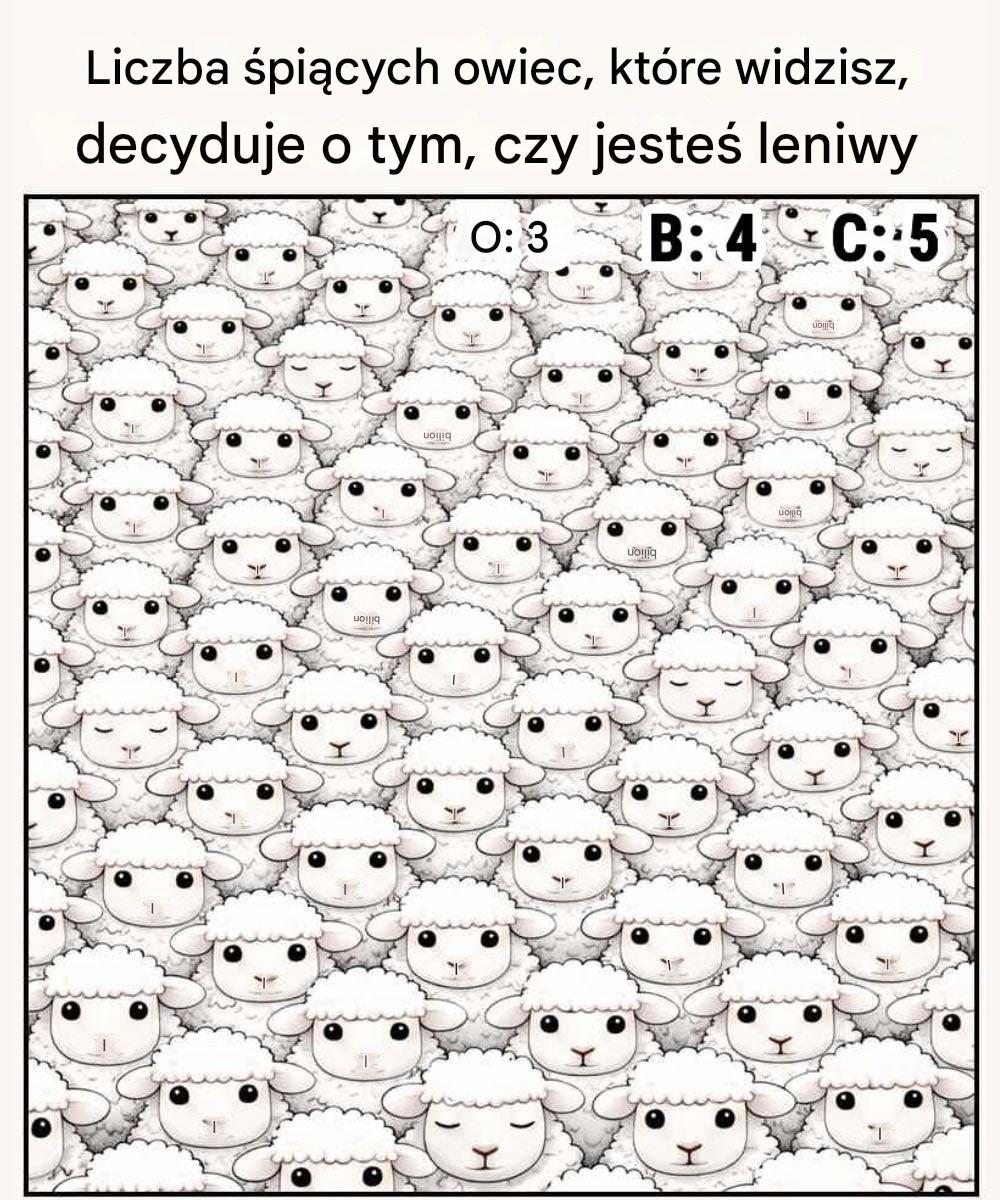
Jeśli znalazłeś 3 śpiące owce:
You may rely on quick scanning rather than deep inspection. You see the big picture first and sometimes move on once you think you’ve solved the problem. Efficient, but occasionally you miss hidden details.
If you found 4 sleeping sheep:
You balance speed and accuracy. You’re observant, but you don’t obsess. This often reflects practical focus — you double-check without overthinking.
If you found 5 sleeping sheep:
You likely have strong visual attention to detail. You slow down, analyze patterns carefully, and don’t stop until you’re certain. This trait often appears in people who enjoy puzzles, strategy games, or analytical tasks.
But here’s the truth: the number you see says more about your approach than your laziness.
The Psychology Behind “Hidden Object” Tests
Hidden object images challenge something called visual discrimination — the ability to notice small differences in similar shapes. The more similar the objects, the harder your brain has to work.
When objects are repetitive (like rows of nearly identical sheep), your brain tries to conserve energy by assuming sameness. That’s why you may initially overlook the sleeping ones. It’s not laziness — it’s efficiency.
Only when you deliberately slow down and examine details does your brain override that shortcut.